
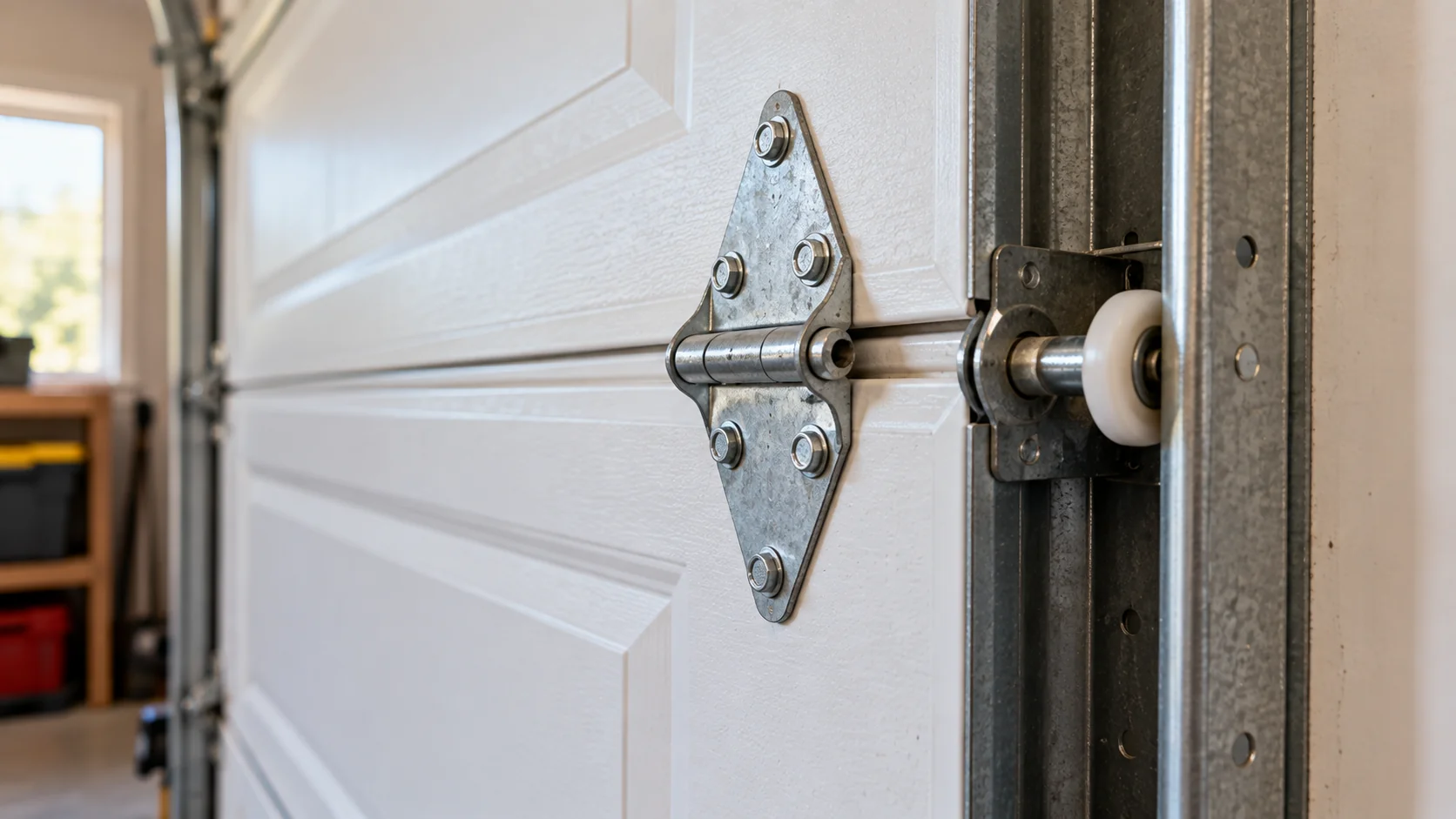
A garage door is a substantial moving assembly in a Llano home, and maintenance should address both condition and safety. Dust from rural roads, heat, moisture and ordinary use can affect components, but a local setting does not predict a specific failure. A useful routine starts with observation from outside the travel path and the exact door and opener manuals. Some cleaning and battery tasks may be suitable for a homeowner on a sound system; springs, cables and other loaded hardware remain technician work. This guide explains that boundary and separates periodic maintenance from the manufacturer's monthly safety checks. Do not operate a crooked, damaged or unpredictable door to complete a checklist, and do not assume lubrication can make an unsafe system usable.
Safety First: The Line You Should Never Cross
Start with a visual check from outside the travel path. If the door is crooked, has loose cables, shows a spring gap or has been behaving unpredictably, do not operate it or pull the release. The homeowner tasks below apply only to a sound door and remain subject to the exact door and opener manuals.
Springs and cables can store dangerous energy even on a stationary door. Do not treat a closed door or a damaged spring as unloaded; work on these assemblies belongs to a trained technician.
So the rule here is simple. You may look at springs, cables, drums and bottom brackets, note rust, gaps, fraying or a loose cable, and describe what you saw on the phone. You may not touch them, tighten them, adjust them, or take anything apart near them. The same goes for a door that has jumped its track, a panel bent under load, and the bottom bracket at the corner of the door, which stays under cable tension even when the door is closed.
Homeowners can perform the limited cleaning, observation and manufacturer-specified safety checks described below on a sound door. Door balance and loaded hardware remain technician work. When you hit something under tension, stop and hand it to our garage door repair team.
What the Llano County Environment Does to a Garage Door
Maintenance intervals that make sense in a city garage are too long out here, and it is worth understanding why so the checklist feels less arbitrary.
- Caliche and limestone dust. Fine, alkaline, abrasive dust settles into the track channel and sticks to any greasy surface. Mixed with old lubricant it becomes a grinding paste that eats roller bearings and wears track.
- Heat. An unconditioned garage can become hot, but its temperature depends on the building, weather and exposure. Heat thins light oils until they run off, hardens old grease, degrades rubber seals, and stresses opener electronics.
- Cold snaps. Hill Country winters are mild until they are not. Metal contracts, grease stiffens, and steel that has been quietly fatiguing all year tends to fail on the first genuinely cold morning.
- Hard water and humidity. Mineral-heavy water and swings in humidity encourage surface rust on springs, hinges, and fasteners, particularly on doors that face weather.
- Wildlife. Around residential properties in Llano, wasps build under the top section and behind photo-eye brackets. Spiders web across sensor lenses. Mud daubers block weep paths. Field mice chew low-voltage sensor wire.
None of that is a reason for alarm. It is a reason to run through the list before summer and again before winter, rather than once a decade.
The Seasonal Schedule at a Glance
| Task | How often | Who does it | Roughly how long |
|---|---|---|---|
| Watch and listen to a full open and close | Monthly | Homeowner | 2 minutes |
| Clear track channels of dust and debris | Follow the exact manual; seasonal review | Homeowner | 10 minutes |
| Lubricate only manufacturer-approved homeowner points | Follow the exact manual; seasonal review | Homeowner | 10 minutes |
| Visual inspection of springs, cables, drums | Twice a year, look only | Homeowner looks; technician touches | 5 minutes |
| Check and clean the bottom seal and weatherstrip | Follow the exact manual; seasonal review | Homeowner | 10 minutes |
| Balance assessment | During professional inspection | Technician | Depends on door condition |
| Photo-eye alignment and lens cleaning | Follow the exact manual; seasonal review | Homeowner | 5 minutes |
| Auto-reverse safety test | Monthly, following the exact manual | Homeowner on a sound door | Allow time to observe safely |
| Inspect trim and visible track fasteners | Seasonal, look only | Homeowner observes; technician repairs | 5 minutes |
| Spring, cable, drum, or track service | When the inspection flags it | Technician only | Scheduled visit |
The Hands-On Checklist for a Llano Garage
Watch and Listen
First look from outside the door's path. Only observe a normal cycle if there are no signs of damage or unpredictable movement; do not repeat a faulty cycle. Keep children, pets and vehicles clear, and stop the observation if anything changes.
A healthy door sounds boring. It moves at a steady pace, the rollers hum rather than clatter, and both sides rise together. Note anything that breaks that pattern:
- A grinding or scraping noise, which often means dry or worn rollers, or debris in the track
- A pop or bang at a particular point in the travel, which can mean a roller jumping a dent in the track
- Jerking, hesitation, or a shudder partway up
- One side rising ahead of the other, or the door looking visibly crooked in the opening
- A rattle from loose hinges or hardware
- The opener straining, laboring, or getting louder than it used to be
Write down what you hear and where in the travel it happens. That description is genuinely useful to a technician, and it is the sort of detail that gets the right parts on the truck the first time.
Clean the Tracks (Do Not Lubricate Them)
Keep tracks clean and dry. Grease can collect abrasive grit; cleaning does not include track alignment or bracket adjustment.
What to do:
- Wipe the inside channel of both tracks with a rag. An old towel wrapped around a paint stir stick reaches the back easily.
- For stubborn buildup, dampen the rag with a mild household cleaner approved for the door's finish, then wipe dry.
- Vacuum out grit, leaves, cedar debris, and the surprising amount of dirt bugs drag in.
- Look down the length of each track for dents, flat spots, or a section pinched out of alignment. Note them. Do not try to bend a track back into shape or loosen the track brackets, because the track is what keeps the door captive.
While you are down there, clear the floor area where the door lands. A small rock, a chunk of mortar, or a hardened clod of mud is enough to keep the door from sealing and to trigger a reversal.
Lubricate the Right Parts With the Right Product
Use the exact door manual to identify suitable lubrication points and products.
Use: a garage-door-specific lubricant, ideally a lithium or silicone-based spray made for the job.
Avoid: general-purpose penetrating sprays used as a long-term lubricant. They are excellent at freeing a stuck fastener and poor at staying put, and they strip existing grease and attract dust. Heavy automotive grease is also a mistake in a dusty garage, and cooking oils and household oils go rancid or gum up.
For homeowner lubrication, the door must be sound, fully closed and prevented from unexpected operation according to the manual. Use only the specified product and accessible points the manufacturer identifies. Keep fingers away from hinge joints, roller paths and other pinch points.
Do not lubricate or service the torsion shaft, spring assembly, drums, cables or loaded brackets. Some sealed rollers do not need lubrication, and opener drive maintenance varies by model. A general instruction to grease every chain, rail or bearing can damage equipment or put you near loaded hardware. Ask the technician to show the appropriate routine for your specific door.
Wipe away excess only at safe, accessible surfaces. If a door is noisy, crooked or binding, stop and arrange inspection rather than repeatedly cycling it to distribute lubricant.
The Bottom Seal, Weatherstrip, and Trim
The bottom seal is the flexible strip in the channel along the bottom of the door. It keeps out rain, scorpions, mice, blowing dust and a surprising amount of heat.
Check it by closing the door and looking from inside with the lights off. Daylight along the bottom edge means the seal is compressed, torn, brittle, or the floor is uneven. Also inspect:
- The perimeter weatherstrip on the jambs and header, which dries and cracks in Texas sun
- Gaps at the corners where the vertical and horizontal seals meet
- Rot or insect damage in wood trim, especially at the bottom few inches
- Loose exterior trim, which you can tighten with a screwdriver
Seal replacement is usually straightforward on a door in good condition, and we handle it as part of a service visit. Do not remove the bottom seal on a door with a broken spring, and do not remove the bottom brackets to get at anything, because those brackets are under cable tension.
Inspect Springs and Cables With Your Eyes Only
This is the inspection that matters most and the one where you do the least. Stand back, use a flashlight, and look. Hands stay down.
On the springs, look for:
- A visible gap in the coil of a torsion spring, which means it has already broken
- Coils that look stretched, separated, or uneven along the spring
- Heavy rust, flaking, or pitting
- An extension spring hanging loose or sagging noticeably
On the cables, drums, and brackets, look for:
- Fraying, broken strands, or a fuzzy, unraveling look anywhere along the cable
- Kinks, flat spots, or rust
- Slack cable while the door is closed, or a cable that has jumped off its drum
- A cable that appears to be wound unevenly on the drum
- Rust or distortion at the bottom brackets
If any of that is present, stop using the door, do not use the manual release cord as a workaround, and call. Broken springs and doors stuck off track are treated as priority calls. Leave those findings to our spring repair and replacement service. Do not attempt a loaded-hardware repair.
Safety Checks for a Sound Llano Door
Monthly safety-reversal checks follow the exact opener manual, not an annual or twice-yearly schedule. These checks do not replace professional assessment of balance, cables or springs. Do not perform them on a door with suspected damage, abnormal movement or a failed counterbalance.
The balance assessment
Leave balance testing to a trained technician in this checklist. Do not pull the manual release and let go of a raised door to see whether it stays put. Visual appearance alone cannot confirm that springs and cables are safe, and an unsupported door can fall.
You can report movement or noises you already observed without recreating the fault. A door that has become heavy, crooked or unpredictable should stay out of service. The technician can secure it, inspect the counterbalance and determine the correct testing procedure before reconnecting it to the opener.
The photo-eye test
Follow the model's photo-eye test procedure with the opening clear and the door mechanically sound. Many manuals specify blocking the beam with an object before giving a normal close command from outside the travel path. Do not use your body to break the beam or hold the wall button to override a sensor.
If the response does not match the manual, stop automatic use. You may clean accessible lenses with a soft dry cloth while the door is stationary, but do not repeat tests on a damaged system, bypass sensors or adjust force settings. Arrange inspection by our opener specialists before returning it to operation.
The auto-reverse test
On a sound door, follow the opener manufacturer's contact-reversal test exactly; many specify a two-by-four laid flat beneath the fully open door. Place the board only while the door is stationary, then move completely clear before giving the close command. Never hold it in place with hands or feet.
The door must reverse as the manual specifies. A failure may involve travel settings, the safety system or mechanical condition; it does not diagnose one cause. Stop automatic use, keep everyone clear, and have a technician inspect it. Do not increase force, override the sensors or repeat a failed test.
What a Professional Maintenance Visit Adds
A professional visit assesses mechanical condition, balance and safety settings beyond the limited homeowner checks.
| Homeowner checklist | Technician service visit |
|---|---|
| Clean tracks, lubricate hinges and rollers | Measure and correct door balance |
| Visual spring and cable inspection | Spring replacement, cable replacement, drum work |
| Clean photo-eye lenses, check alignment | Diagnose sensor wiring, boards and force settings |
| Manufacturer-specified monthly reversal checks on a sound door | Assess balance; adjust travel and force settings correctly |
| Check and report seal condition | Replace seals, rollers, hinges and bearings |
| Tighten exterior trim | Straighten or replace track, correct alignment |
| Note noises and symptoms | Full inspection with a written estimate before work |
We serve Llano along with the rest of our Hill Country service areas, and you can see what neighbors have said about that work on our customer reviews page. Our hours are Monday through Friday, 8am to 5pm, and estimates are free with pricing given in writing before work begins.
Frequently Asked Questions
How often should I do garage door maintenance in Llano?
Use the door and opener manuals to set the maintenance schedule; a seasonal review is an organizational aid, not a substitute for their requirements. Households in dusty rural areas, along caliche roads, or with doors cycling many times a day may need more frequent inspection and approved cleaning, with lubrication only at the points and intervals identified by the manufacturer. The monthly watch-and-listen check takes two minutes and catches most problems early.
What lubricant should I use on my garage door?
Use the lubricant and maintenance points listed in the exact door and opener manuals, not a universal spray routine. On a sound, secured door, limited hinge or roller lubrication may be permitted; sealed parts may need none. Keep tracks clean and dry, and leave the spring assembly, drums, cables and loaded brackets to the technician.
Can I inspect or adjust my garage door springs myself?
Inspect visually, yes. Adjust, absolutely not. Torsion and extension springs store enough energy to cause severe injury or death when released without the right tools and training, and that is true even on a door that appears to be sitting still. Look for gaps, rust, stretched coils and frayed cables, then call a technician for anything you find.
My door is noisy but works fine. Is that a problem?
Noise is usually the earliest warning a door gives. Rattling often means loose hardware, grinding usually means dry or worn rollers, and a repeated bang can mean a roller passing a dented section of track. Cleaning the tracks and lubricating hinges and rollers solves many cases. If the noise persists afterward, something is wearing and worth inspecting.
How do I know if my garage door is out of balance?
A change in effort, uneven movement or unexpected drifting is a reason to stop using the door and arrange a professional assessment. Do not pull the release and lift a suspect door to confirm it. The technician can secure the system, check the counterbalance and explain the appropriate maintenance checks for your particular door.
Do you offer maintenance service around Llano?
Yes. Door Pro Plus serves Llano and the surrounding Hill Country from our Marble Falls shop, Monday through Friday, 8am to 5pm. Most repair calls placed before noon get consideration for same-day service, subject to schedule and parts availability, and broken springs and off-track doors are treated as priority calls. Call and describe what your door is doing.
Call Door Pro Plus When the Checklist Turns Something Up
Door Pro Plus serves Llano and the surrounding Hill Country from the Marble Falls shop. A professional visit assesses the complete door system, explains any necessary repair and provides a written estimate before work begins. Describe the fault when you call rather than operating the door to demonstrate it.
If your inspection turned up a gap in a spring, a frayed cable, uneven or unexpected door movement, or sensors that will not behave, call (830) 385-2449. Describe what you saw and heard, and we will come look at the door in person and give you a free, no-obligation estimate in writing before any work starts. Review the included work and ask how any additional findings would be approved.
We are available Monday through Friday, 8am to 5pm, and most repair calls placed before noon get consideration for same-day service, subject to schedule and parts availability. If the door is stuck, off track, or has felt unusually heavy during earlier use, leave a closed door closed and call (830) 385-2449 rather than forcing it.
Need garage door or glass service?
Door Pro Plus serves Marble Falls, Horseshoe Bay, Burnet, Llano, Kingsland, and the Texas Hill Country. Call 830-385-2449 for a free estimate.